Besoin d'aide ?
Centre d'assistance
Boutique MyKNX
 Logiciel ETS
Téléchargez ETS pour concevoir, mettre en service et gérer des projets KNX. Commencez par un essai gratuit ou choisissez une licence.
Logiciel ETS
Téléchargez ETS pour concevoir, mettre en service et gérer des projets KNX. Commencez par un essai gratuit ou choisissez une licence.
 Applications ETS
Les applications ETS enrichissent votre flux de travail ETS grâce à des outils spécialisés pour la documentation, la mise en service, le diagnostic, et bien plus encore. Visitez notre boutique pour découvrir les applications ETS disponibles.
Applications ETS
Les applications ETS enrichissent votre flux de travail ETS grâce à des outils spécialisés pour la documentation, la mise en service, le diagnostic, et bien plus encore. Visitez notre boutique pour découvrir les applications ETS disponibles.
Image
Image




Open source KNX-IoT Platform
Other in Sint-katelijne-Waver
Applications utilisées
Lighting
Heating, Ventilation & Air conditioning (HVAC)
Security and Safety
Operation and Visualisation
Energy Management/Smart Metering
Other
Automation and Remote Access
Blind and Shutter Control
Détails du projet
| Catégorie | Valeur |
|---|---|
| Catégorie de projet | Other |
| Type de projet | Other |
| Année d'achèvement | 2017 |
| Taille du projet | 1 – 100 |
| Nombre d'appareils KNX utilisés | 1 – 25 |
| Supports de transmission KNX | Twisted pair |
| Heures-hommes | 501 – 1.000 |
| Main-d'œuvre | 1 – 5 |
Mis en vedette dans ce projet

Description détaillée
Energy Efficiency
The usage of automated functions already save energy in every installation. Especially the usage of KNX has a lot of potential for further energy savings, which can contribute to a better environmental footprint. Be extending KNX to more functions and applications, energy savings of up to 60% can be realised. Thanks to the flexibility of KNX, these functions can easily be implemented in this installation
Innovation
Smart homes and buildings are always an upgrade in comparison to a conventional installation. Not only automated functions and a higher level of comfort contribute to a higher living standard, but also the possibility to be ready for coming innovations. Thanks to the usage of KNX, the door has been opened to integrate new innovative solutions, using the worldwide STANDARD for home and building control.
Applications utilisées
- Lighting - Switching, Dimming
- Heating, Ventilation & Air conditioning (HVAC)
- Security and Safety
- Operation and Visualisation - Switches / Push Buttons, PC Visualisation, Web Servers, Tablets and smart phones
- Energy Management/Smart Metering
- Other
- Automation and Remote Access - Internet Access
- Blind and Shutter Control - Individual Control
Description des clients
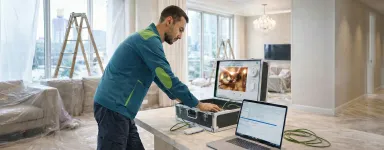
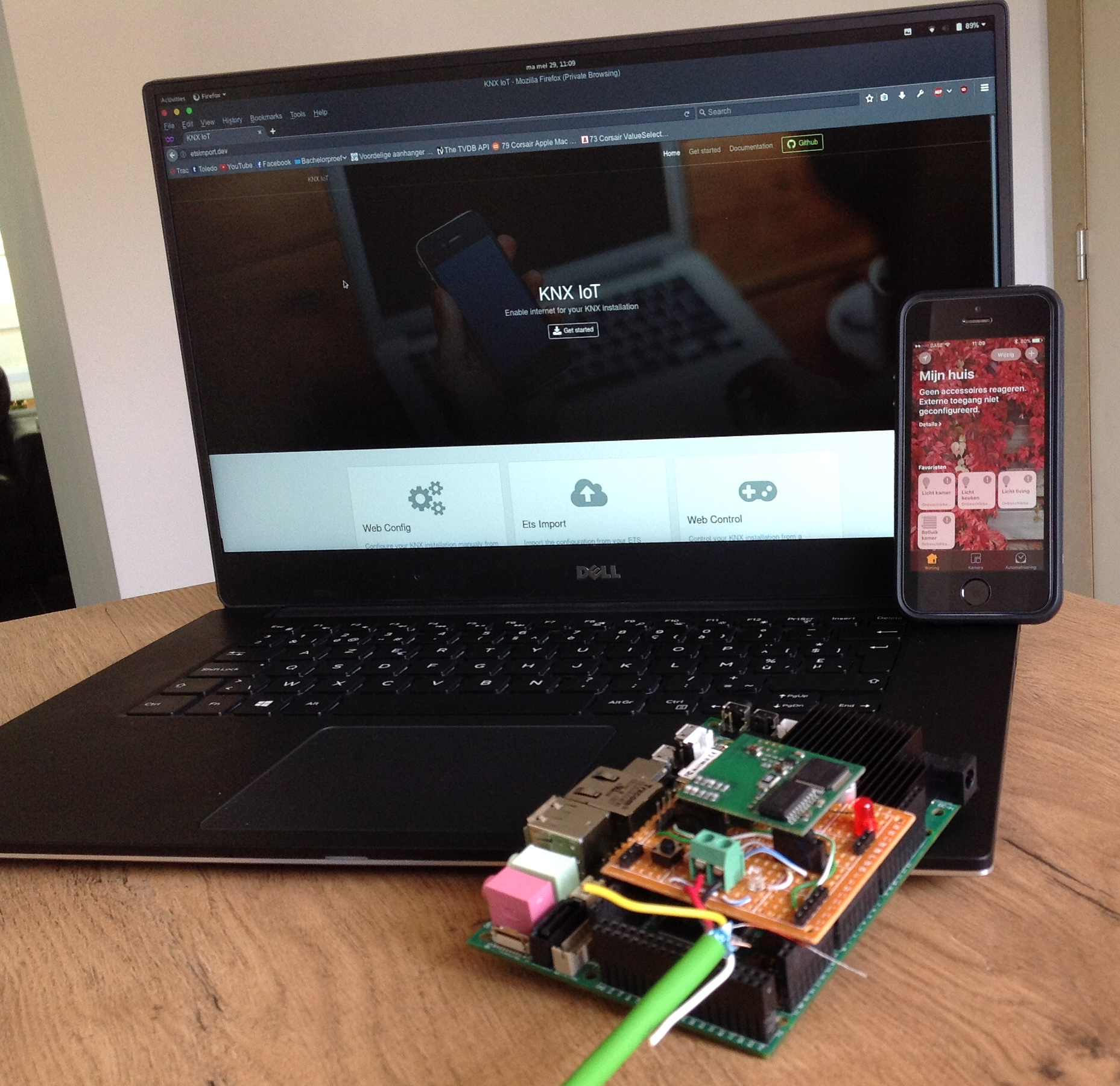
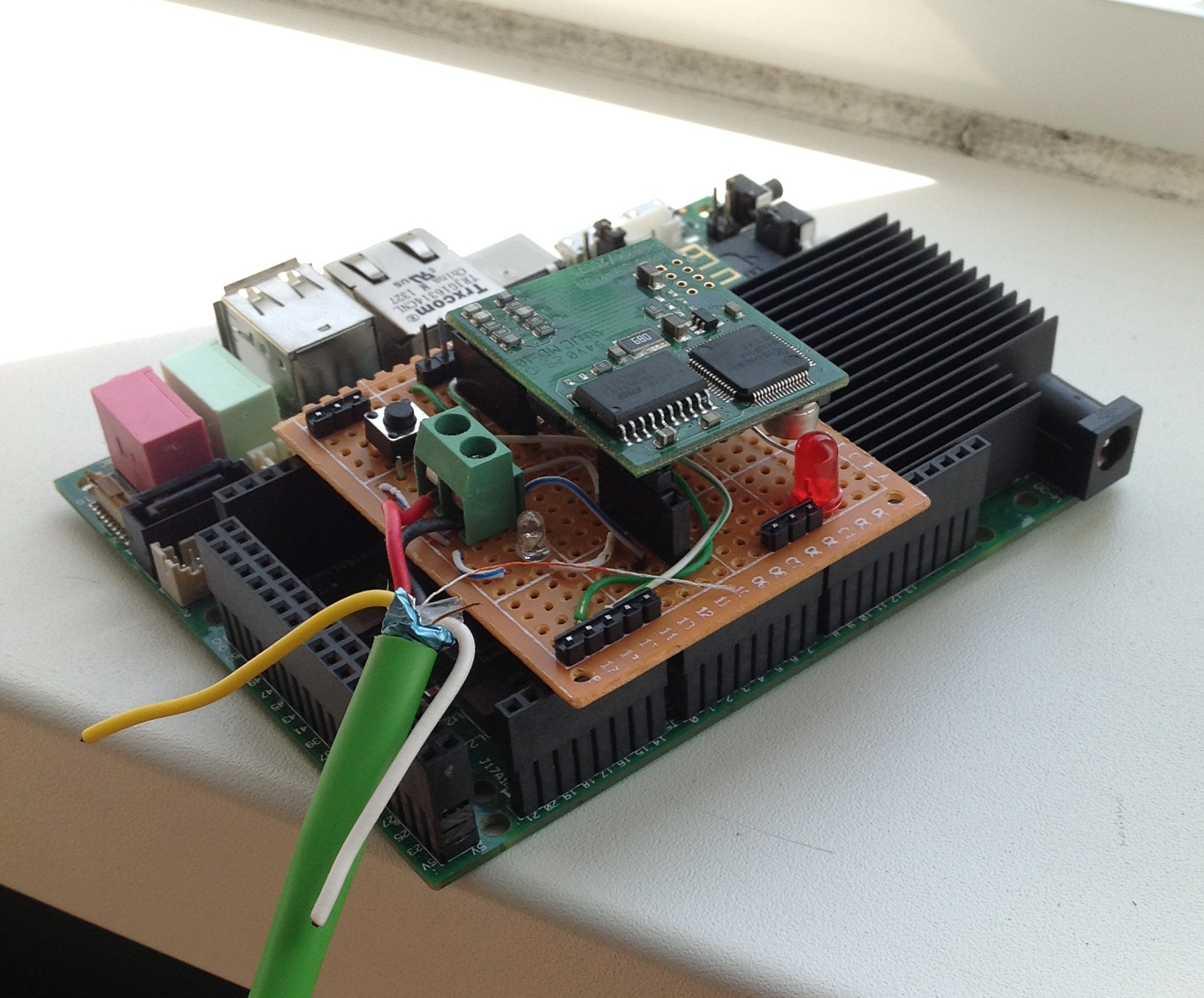
The project is the development of an open source KNX-IoT interface using a Tapko SIM-KNX module and an ARM Cortex A9 micro-processor. The software-interface to the bus is developped in such a way that every software developper can easily adapt his own software for comminication to the bus. To prove this, three cases were worked out:
- a webinterface to the bus with a javascript frontend en PHP backend using AJAX requests
- an ETS importmodule to import EST data and convert it to a JSOn file
- an interface to Apple Homekit, developped with the Laravel PHP framework.
Coordonnées
| Nom de l'entreprise | Thomas More University of Applied Sciences, Campus De Nayer |
| E-mail de l'entreprise | jan.derua@thomasmore.be |
| Company Website | http://thomasmore.be |
| Nom du contact | Jan Derua |
| Fonction de contact |