








By Bhavesh Doshi, Entelechy.
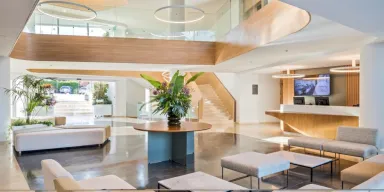
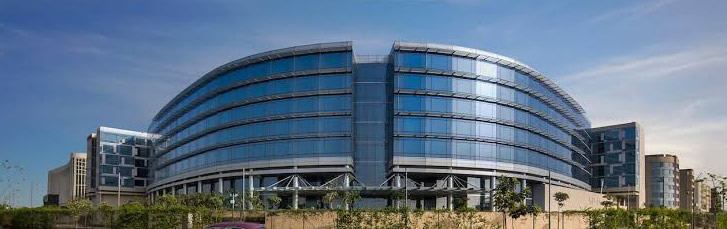
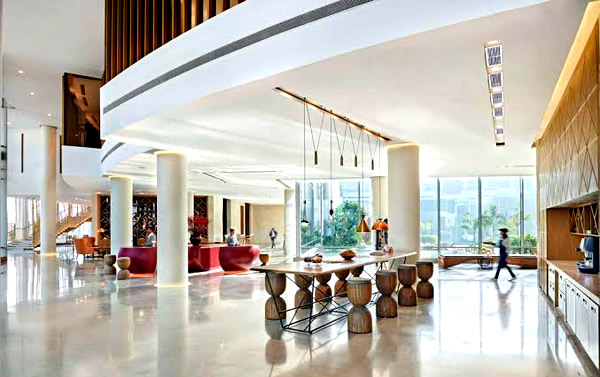
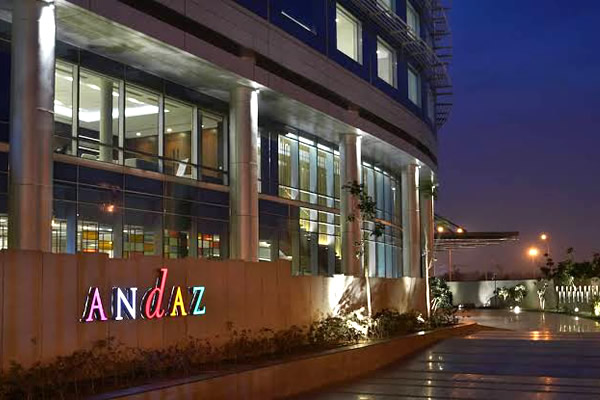
The Hyatt Andaz, an award-winning upscale/luxury lifestyle brand hotel, was opened in New Delhi, India in 2018. The hotel has 401 rooms and 200 apartments. We started working on this project in 2012 with a mock up. Being luxury hotel, the details were quite elaborate.
Entelechy Systems, the most experienced and largest integrator
for KNX systems in India, designed the GRMS (Guest Room Management System) for
this project, and also commissioned and implemented the systems.
The aim of
the project
The main objective was to provide a high-class immersive
guest room experience by providing the right technologies and creating a
responsive ambience, whilst saving energy through efficient use of automation
systems for lighting and HVAC.
Since New Delhi experiences extreme temperatures, which can reach up to 47°C in summer and down to 0°C in winter, controls for the HVAC system were a prime consideration and had to be able to adapt to guests' needs efficiently. There was also a requirement for dimming controls for creating the right mood and ambience.
Most importantly, the GRMS was required to provide
centralised visualisation, status and monitoring of room controls and
collection of room usage data. Preventive maintenance and logging of all alarms
and errors were also a requirement. The GRMS had to integrate with the PMS
(Property Management System - in this case OPERA) and the BMS (Building
Management System), and had to be able to integrate, in future, with the
hotel's loyalty programme, so that the hotel can provide a preferred environment
to its loyal and VIP guests during check in. There should also be provision for
integration with BYOD (Bring Your Own Device) mobile/tablet controls for guests.
How the
installation was designed to save energy
Out of the many suppliers who competed for this project,
Entelechy selected the ABB i-bus KNX system, due to its flexibility and
technical superiority. KNX was used as it is a standard and highly interoperable.
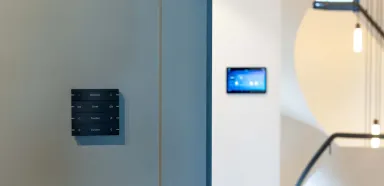
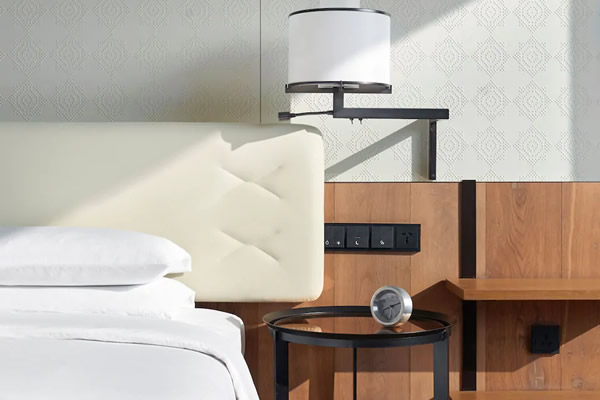
The 401 rooms are equipped with an ABB GRMS, with support for HVAC, blinds, lighting and key card. Cooling/heating modes can be activated based on the seasons, which makes the HVAC system more efficient and responsive to guests' requirements. Combining PMS integration with the room occupancy key card sensor, the system can monitor the occupancy and adjust the temperature and lighting accordingly, and save energy. In addition, a default 'Comfort' mode in the rooms saves quite a bit of energy, as guests don't need to operate the HVAC frequently.
The system is also interfaced with the Opera PMS for dynamic
control based on check in/check out status and guest preferences. It ensures
the logging of data and preferences of guests, gives a better customer
experience, and also switches off unwanted loads.
Guest rooms have automated RTC (Room Temperature
Controller), lighting, occupancy and shading, DND (Do Not Disturb), MMR (Make
My Room) as well as switching off AV devices, all monitored from the GRMS for
efficient usage. The NETx Automation BMS was used for energy savings and
supervisory controls.
Energy
savings
Whilst we don't have any metering data of the connected
loads, or any logic to calculate energy saving through our system, the BMS
system does monitor energy consumption and we assume that energy savings are 15
- 20%. The HVAC is certainly saving energy in the rooms, as it is
well-controlled through logic. Furthermore, the goal of the hotel is to provide
a superior guest experience using efficient, reliable and robust systems with
minimal breakdowns, and this in turn saves further energy.
Adjustments
since completion
The system has been updated and many changes have been made
based on the needs of the operational team and feedback from guests.
Major changes have been made to the HVAC (Comfort operation)
logic. The biggest challenge the hotel faced was the switchover from cooling
mode to heating mode, and vice versa, as the seasons change. The HVAC was
designed to use a piping system, whereby either hot water or cold water can be
run through the pipes. This design was beyond our control, but it did mean that
when switching from cold water to hot water in winter, the RTC in the room had
to change its operation from cooling mode to heating mode. As this was not
possible to achieve without recommissioning, we had to create an automated
switchover program for changing the mode from cooling to heating and vice
versa, in the RTC. The switchover now happens by pressing a button in the
central visualisation system, and this fix saved the hotel a huge amount of
money, as it did not have to install additional pipes for running hot water.
The switchover is also transparent to the guest.
Why KNX was
used for this project
The system here is being updated constantly, both at micro
(field) level and macro (central) level, but thanks to KNX being a standard-based
system, upgrades are guaranteed to be cost-effective.
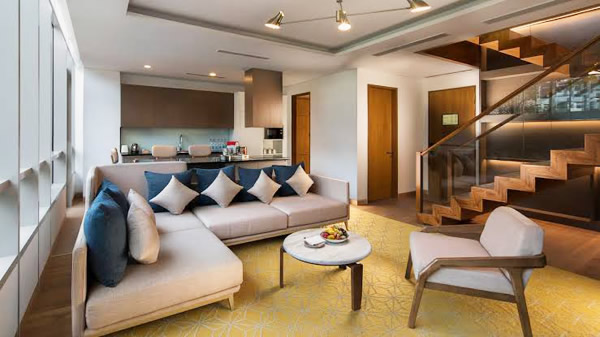
This is a luxury hotel and all of the products and their
finishes were meticulously chosen. Because so many manufacturers comply with
the KNX standard, it gave our designers the freedom to choose the switches and
keypads they wanted, knowing that they would all be interoperable. For this
project, we used ABB Desto KNX backend components, the ABB Spain Millennium
range of KNX RTCs and complementary range of wiring accessories from Busch
Jaeger in Germany.
Furthermore, the distributed intelligence structure of the
KNX system helped in reducing cabling and its cost, and the robustness of the
system ensures that the installation operates reliably, 24/7, year after year.
Using TCP/IP as the communication medium, we could also reduce the number of
distribution panels across the building floors whilst ensuring faster and
reliable communications.
Another advantage was hassle-free and less-complex
integration between KNX and third-party systems such as the BMS and PMS, which
ensured smooth and glitch-free communication, and reduced installation time.
Lessons
learned and consequences
This project has been a big learning curve for us. We
realised how important both the user experience is and the energy saving
functions. By implementing the right technology, namely KNX, we have been able
to provide added value to the hotel's owner, helping them to differentiate
themselves from their competition through sustainable operation and a great
guest experience.
The consequences of this project are very positive; it gave good visibility and increased credibility to our company, Entelechy, as system and design integrator. This was the first KNX hotel project in India to have central control and PMS integration, and I am sure that we, along with ABB, will be able to convince many more hotels to adopt KNX for their GRMS requirements as a result of its success.
Bhavesh Doshi is the Founder and CEO of Entelechy, a leading designer and integrator of home and building automation in India.