









Late one night, alone in a nearly completed airport terminal, KNX system integrator Gašper Pirnat found himself thinking about the thousands of passengers who would soon move through the space without ever noticing the technology working around them. It was a moment that brought home what successful system integration really means.
Gašper Pirnat has been surrounded by electrical engineering for most of his life. His father ran an electrical company, and Pirnat spent school and university holidays working alongside installers long before building automation became his full-time career.
He first encountered KNX when it was still known as EIB.
“My interest in technology was growing quickly, and KNX was the system that I chose to devote my career to,” he says. “I chose it because I trusted that it would stand the test of time. Many years later, I can honestly say that my choice was correct.”
Today, Pirnat has worked with KNX full time for more than 15 years. Alongside his work as a KNX system integrator at elektro PIRNAT, he leads Slovenia’s only KNX-certified training centre and continues to take on projects that test his own knowledge.
“These are exciting times for me,” he says.
Alone in the terminal

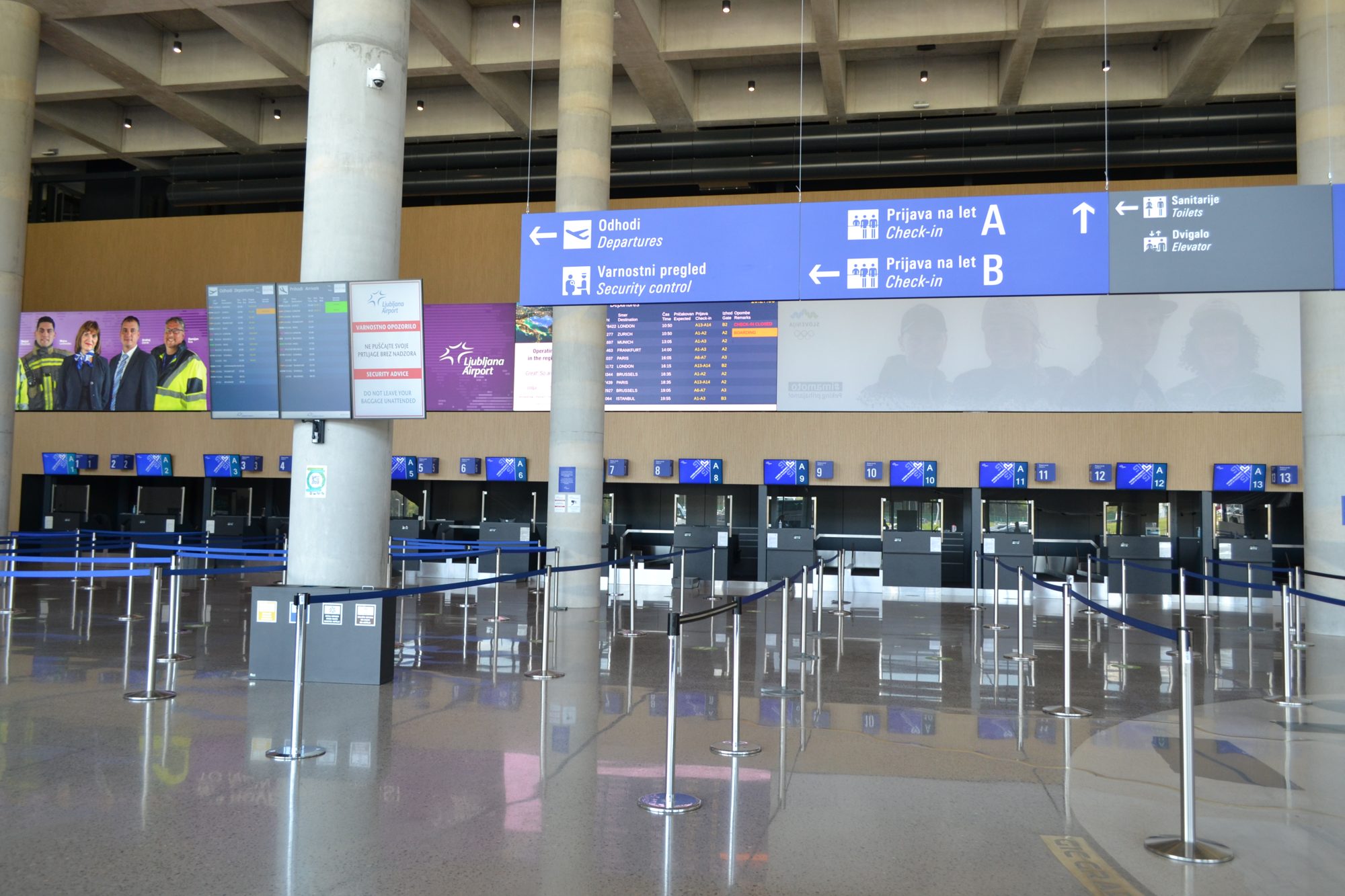
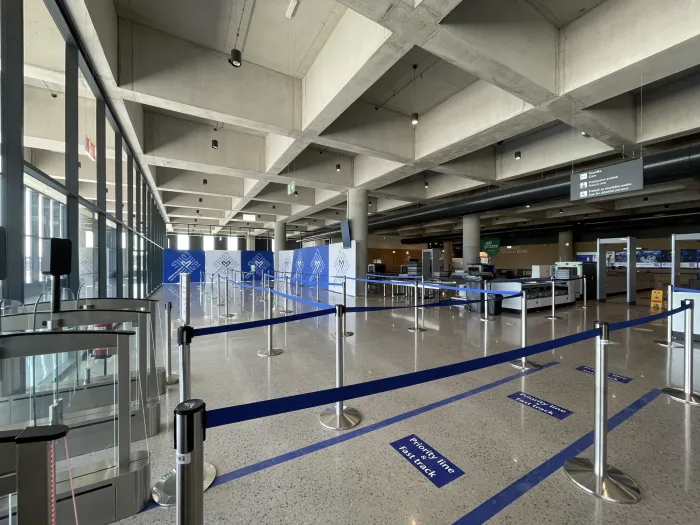
One of those projects was the expansion of the passenger terminal at the airport serving Slovenia’s capital.
Pirnat was responsible for the lighting control throughout the new terminal, which sits alongside the existing building but operates as a separate system. The lighting uses DALI, integrated through KNX/DALI gateways, with control based predominantly on presence detection rather than conventional switching.
Daylight sensors measure available natural light and allow the lighting to respond accordingly.
“There is a fine balance between comfort and energy saving,” says Pirnat.
The project was approaching completion when Pirnat found himself working late one evening. He had brought with him the small picnic table and chair he uses as a makeshift workstation on site. Eventually, everybody else left.
“I was alone on the construction site. The project was in its final stages and, during KNX commissioning, when the application programme is downloading, you have some time and your mind wanders.
“All of a sudden I realised I was alone in an empty, dark terminal. The silence was eerie.”
As he put the finishing touches to the system and tested the lighting control, his thoughts moved from the technology in front of him to the people who would soon occupy the building.
“I wondered if any of those thousands of passengers who would pass through these spaces would ever think about the knowledge, thought, care and experience that went into the regulation, so that it works so well they don’t even notice it when they rush to the gate.”
It gave him a particular sense of accomplishment.
“I realised that I had helped contribute to something that thousands of people would use every day.”
Technology passengers never see
For most passengers, lighting control is unlikely to be something they think about at all. Pirnat would probably regard that as a sign the system is doing its job.
The scale of the airport did, however, present some specific design considerations.
Despite the size of the installation, the project uses KNX TP rather than an IP backbone. Pirnat says this was a deliberate decision because the KNX infrastructure passes through police, customs and other restricted areas where an IP connection was not considered appropriate for the project.
Careful positioning of motion detectors was also important, particularly in areas where ceiling heights varied considerably.
At the centre of the installation is a visualisation server that gathers information from input devices and provides access to the lighting system and its settings. The platform was supplied by Slovenian company ComfortClick.
Pirnat particularly liked being able to incorporate technology developed in his home country into the project.
The customer also retains access to the system settings, allowing lighting behaviour to be fine-tuned without requiring Pirnat to return every time an adjustment is needed.
The installation has since led to further work. Following the completion of the new terminal, KNX lighting control is now being extended into the older terminal building. Across the expanding project, the system currently includes 202 motion sensors and 39 KNX/DALI gateways.
Integration is a team effort
The airport also strengthened Pirnat’s confidence in applying KNX at very different scales.
“The project proved that KNX is suitable for small and big projects,” he says. “Whatever the project, I know KNX can handle it. It was a great confidence builder.”
But perhaps the more important lesson concerned the role of the system integrator itself.
An integrator may be responsible for bringing building systems together, but Pirnat is keen to challenge any suggestion that successful integration is the work of one person or discipline.
“A system integrator joins all the systems and makes them work together. But if the electrician, plumber, HVAC installer and everybody else doesn’t do their job well, the system integrator can do miracles and the system still won’t work efficiently.
“It is teamwork, and communication between everybody involved in the project is key to success. Integrators play a crucial role, but all the other installers are important as well.”
The work behind the magic

That collaboration is largely invisible to the person who eventually occupies a smart building.
Pirnat carries out most of his KNX programming away from site, travelling to the project primarily to download the configuration and test functionality.
From a customer’s perspective, the final commissioning process can therefore look deceptively straightforward.
“It must seem like it is all coming together like magic,” he says. “It can look as though it takes a few hours to commission a project, when in reality there is much more going on behind the scenes that they never see.”
Behind those few hours can be years of experience, project preparation, troubleshooting and testing, together with the work required to make systems supplied by different trades operate as one.
Pirnat believes continued learning is therefore an essential part of being a good KNX system integrator.
“Any good KNX system integrator will tell you that experience, willingness to learn and keeping up with new developments in the KNX world are key.”
It returns him to that quiet night in the empty airport terminal.
The passengers who now walk beneath its lights are unlikely to know who positioned the sensors, programmed the KNX system or spent hours testing how the building would respond as they moved through it.
That, in many ways, is the point. When building automation works well, the technology can recede into the background and leave people simply getting on with what they came there to do.
But knowing what went into making that experience possible is precisely where the satisfaction lies for Pirnat.