







Heating our homes, lighting rooms, turning appliances on and off, they are all essential for modern living, but all contribute to rising carbon emissions. Residential energy use accounts for a significant portion of global greenhouse gases, making the way we manage energy at home more important than ever. One increasingly popular solution is smart home automation—but can smart devices really help reduce our carbon footprint?
In this article, we explore the role of smart home automation in cutting household emissions, without overpromising. We'll also show how KNX, the global standard in smart home automation, offers a scalable and sustainable path toward more energy-efficient living.
The energy equation: How homes contribute to emissions
Homes are responsible for 20–30% of total energy consumption in the EU, according to the Energy consumption in households Report by Eurostat. This includes:
-
Heating and cooling (often the largest share)
-
Lighting
-
Appliances and electronics
-
Standby energy or "phantom load" from unused device
Much of this energy is used inefficiently. Lights left on in empty rooms, heating running while no one’s home, or appliances drawing power even when they’re not actively used. Reducing energy waste is key to cutting carbon emissions, and this is where smart home automation becomes a powerful tool.
Consult our complete guide on Sustainable smart living with KNX
How smart home automation could reduce carbon emissions in your household
1. Smart HVAC and lighting control: Only when and where needed
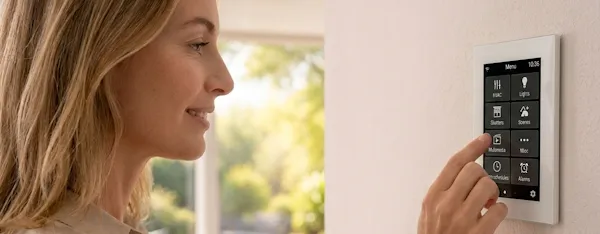
HVAC systems are the biggest energy consumers in most homes (source: Eurostat); lighting follows in third place. By installing smart thermostats, automating your climate controls and lighting homeowners and renters can enjoy the following benefits:
-
Scheduling: Heat, cool and lighten your home only when necessary.
-
Zoning your home: Only condition the rooms you're using.
-
Controlling remotely: Adjust and control temperatures, HVAC appliances and lighting even when you're away.
-
Connecting to sensors: If your smart devices are compatible with each other, you can connect them to one another which allows for even more advanced home automation. For instance: a motion sensor that hasn’t detected any movement for 30 minutes, will automatically switch off the lights and turn down your HVAC appliances to ‘sleeping mode’.
Learn more about the possibilities of smart lighting
2. 24/7 energy monitoring thanks to smart appliances
With energy saving appliances such as smart outlets and smart meters, you can:
- Cut standby power waste by automatically switching off devices entirely when not in use.
- Automate schedules for high-energy appliances like dishwashers or washing machines.
- Use energy dashboards to identify which devices consume the most power.
This insight empowers homeowners to change habits and replace inefficient appliances with better alternatives.
What you need to know about smart meters
Integration with renewable energy
Smart home systems can also enhance the use of renewable energy sources like solar panels and additional battery storage:
-
Schedule heavy-load appliances to run when solar output is high.
-
Prioritize self-consumption over grid energy.
-
Manage battery storage more efficiently.
With the right setup, smart automation becomes the glue that connects and optimizes your sustainable home ecosystem.
Discover how a smart setup with a renewable power source benefits you
Why KNX is a suitable partner for your sustainable smart home ecosystem
Not all smart systems are created equal. Many proprietary systems rely on closed software, frequent upgrades, and limited interoperability, leading to tech waste and short product lifespans.
KNX offers a different approach:
-
Open standard: Compatible with thousands of certified devices across hundreds of brands. Learn more about the need for open standards in the home automation industry.
-
Long-term support: No forced obsolescence or recurring license fees.
-
Energy efficiency by design: KNX protocols minimize energy use and allow full control over HVAC, lighting, blinds, and more.
KNX systems also support smart integration with renewables, smart meters and intelligent load balancing, making them ideal for homes aiming to reduce their environmental impact without compromise.
Home automation is a tool for sustainable living, not the end solution
While smart automation helps reduce waste and optimize energy use, it’s not a stand-alone fix for climate change. Real sustainability also depends on durable building materials, transitioning to green energy sources and conscious homeowner behavior. Smart home automation complements these efforts by making efficiency easier, not by replacing them.
So if you're looking to make your home smarter and greener, KNX is a future-proof place to start. Contact one of our certified KNX partners to plan and install a sustainable home ecosystem.