


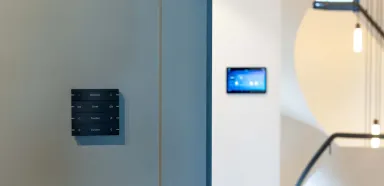







Simon Buddle looks at how audio systems can be integrated with KNX and what types of control make sense.
There are
sounds and images that stick with us throughout life: the first bike; watching
the Moon Landing; the birth of a child. For me, one of my early musical
memories is The Carpenters. Karen Carpenter had the most beautiful voice, and
it is one of the modern-day tragedies that she died so young. However sublime
the singing may be, it does not justify the torment I suffered as a child in
the back of my parent’s car. To be fair, it was the parents who were to blame,
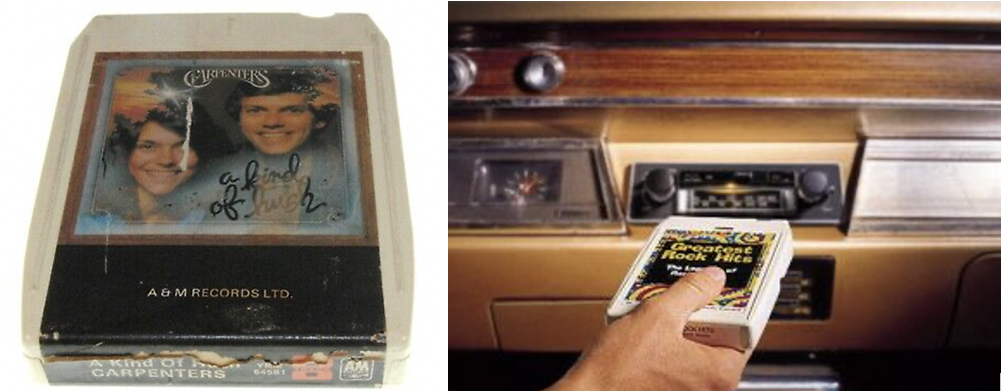
not The Carpenters. You see it was one of only three 8-track cassettes in the
car. And so, week in, week out, hour after hour, journey after journey, as
green fields rolled past the window, Karen’s voice seared itself into my brain.
Back in the early ‘70s three 8-track cassettes meant twelve songs. And those
songs got played and played and played…
The album
Exodus by Bob Marley, released in 1977, was a special order from the local
record shop. It took two weeks to arrive. I paid my mum back for those car journeys.
I think I played it solidly for about six months.

Today, in a
matter of seconds, we can find and play almost any piece of music we can
remember the name of, or indeed sing a few of the words to, the choice is
endless.
Music
anytime, anywhere
Many of us
will have been around long enough to have witnessed the transition from
analogue to digital. CD players gave way to streaming services. The great
staple of the custom installer, the audio distribution matrix, is beginning to
look decidedly dated. Access to music is now in everyone’s hands; phones,
tablets and streaming services are ubiquitous. If we are to offer control
solutions to customers, they must be simple and intuitive. Moreover, they must
be available all around the home and with consistent user interfaces.
How to
integrate audio with KNX
There are
quite a few choices when it comes to integrating KNX and music together. One of
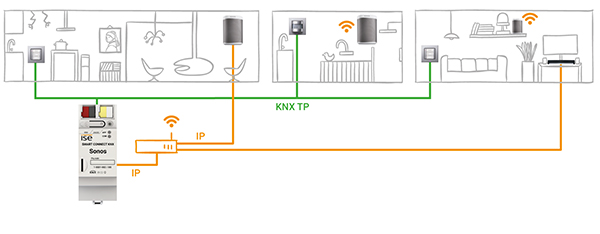
the longest-standing is the ISE Sonos module. This provides a direct connection
between those two worlds, making control easy from any KNX push button or
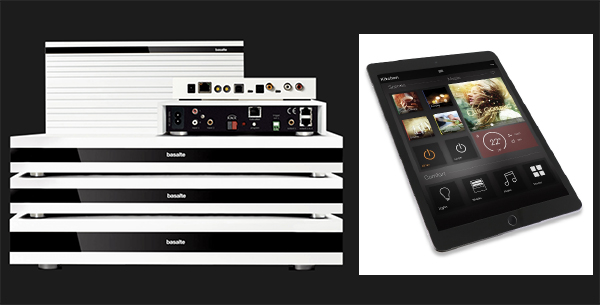
touchscreen. The Basalte Core products
provide connections to streaming and personal music libraries. Coupled with
their options for amplifiers, speakers, and now audio inputs, they provide a
complete solution to music listening in the KNX world.
Some of the
simple benefits of integrating KNX control and music together include muting
audio when doorbells are pushed, or knowing the amplifier’s temperature so that
we can better control the ventilation and cooling. Rather than leaving the air-
conditioning on full-time in the A/V headend, we can increase and decrease it
based on the amplifier’s internal temperature, which can be read out from its
KNX group object.
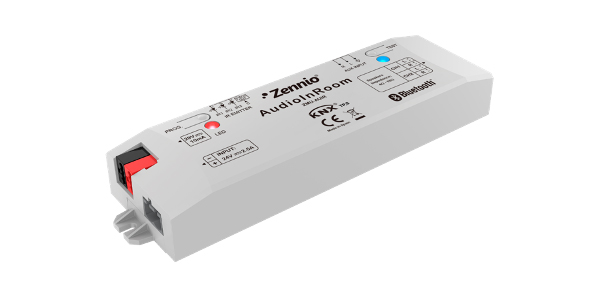
Zennio has
quite an interesting product that works via Bluetooth. It is aimed at the hotel
market, but I can see applications for it in the home too. The Zennio
AudioInRoom is a small KNX-enabled, Bluetooth-connected stereo power amplifier.
You can pair your phone or tablet with it, making it incredibly easy for
customers to get music playing in any room. That could be quite a good choice
in guest bedrooms for example.
Operational
considerations
Music is
complex in terms of control requirements. On/off, volume, next track, previous
track, search, add to queue, save playlist. And, of course, the controls change
based upon the audio input. The controls for a streaming service versus a radio
are vastly different, and those of a compact disc different again. Does anyone
still use these rather antiquated machines? Buttons on walls, I would suggest,
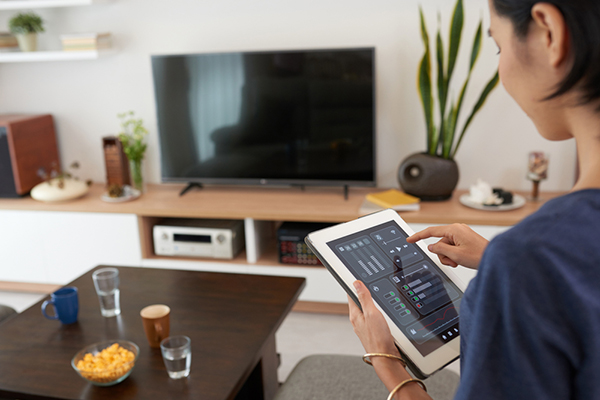
should be simple and obvious in their function. The complexity of music control
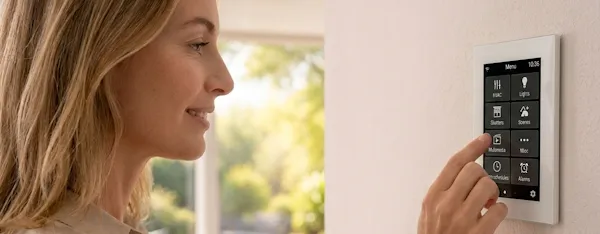
does not really lend itself to being on the wall. What does work is when we
have a screen or similar user interface through which we can integrate the
music with the controls. But once the home and music controls are joined in the
world of KNX, we can create benefits across both. Doorbells muting audio,
volume limiting by time of day, emails for maintenance etc.
Conclusion
One thing I
remember clearly about the 8-track cassette was that it was simple to use. You pushed
it fully home, into the slot, and it started playing. No fast forward, no
rewind, four songs and then back to the start.
Successfully creating simple controls is at the heart of any great KNX project. Adding audio into the mix can complicate matters, but just like any control system, simple interfaces do simple tasks. Buttons provide the client with on/off and start/stop. Music choices are made on screens. It is the same principle as controlling single or multiple lighting or heating cooling zones. If we can imagine how a complete novice might view and interact with our system and make the controls simple enough for them to use, then the rest is child’s play.
Simon Buddle CEng MIET, is a consultant for Future Ready Homes, a specialist in BMS and ELV services system design.